

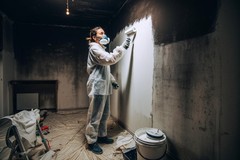
Most people assume fire restoration ends once the soot is wiped away and the charred materials are hauled off. Yet long after the visible cleanup is done, many homeowners notice something lingering: a faint smoky smell that returns on humid days or when the furnace kicks on. That stubborn odor is exactly why one of the most important questions we hear is what does sealing mean in a fire restoration, and why it matters so much to a lasting recovery. If your home has been affected by fire or smoke, our team offers emergency restoration services in Eau Claire and throughout the region that go well beyond surface cleaning.
Sealing is often the final step in the process, and it is one that surprises people who expected the job to be finished after cleaning. It is the difference between a room that merely looks restored and one that truly feels like home again. In this article, we will walk through what sealing actually involves, why it is necessary, and how it fits into the larger restoration picture.
What Sealing Actually Involves
At its core, so what does sealing mean in a fire restoration? Sealing is the application of a specialized encapsulating product to surfaces that have absorbed smoke residue or odor molecules. These products, often odor-blocking primers or sealers, lock in any microscopic contamination that cleaning alone cannot fully remove. Think of it as placing a protective barrier between the affected material and the air you breathe.
Smoke is deceptive. It penetrates deep into porous materials like wood framing, drywall, subflooring, and even the structural bones of a house. No amount of wiping reaches every particle trapped inside these surfaces. Sealing addresses what remains by trapping those odor-causing compounds so they can no longer release into your living space. Once sealed, surfaces can be safely repainted, refinished, or covered without the smell seeping back through.
Why Cleaning Alone Is Not Enough
It is a common misconception that scrubbing away soot solves the smoke problem entirely. Visible soot is only part of the challenge. The real culprit behind persistent odor is the invisible residue that settles into every crack, pore, and cavity of a structure. Heat during a fire causes materials to expand and open up, allowing smoke to embed itself deeply. As those materials cool, they contract and trap the contamination inside.
This is why a home can look perfectly clean yet still smell of smoke weeks later. Temperature changes, humidity, and airflow all coax trapped odor molecules back out. Without sealing, you may find yourself fighting a recurring smell no matter how many times you clean or how many air fresheners you deploy. Sealing is the step that finally breaks that cycle by containing the source rather than masking the symptom.
Where Sealing Is Used in the Home
Sealing is not applied indiscriminately. Our technicians assess which areas genuinely need it based on the severity and spread of smoke damage. Framing and studs exposed during demolition are frequent candidates, since bare wood readily absorbs odor. Attic spaces, subfloors, and the interior cavities of walls often require attention as well, because these hidden areas trap smoke far from view.
Common surfaces and spaces that benefit from sealing include the following:
- Structural wood framing and studs exposed after damaged drywall is removed
- Subfloors and the underside of flooring materials
- Attic sheathing, rafters, and insulation cavities
- Ductwork components and surrounding areas where smoke traveled
- Concrete, masonry, and other porous surfaces that absorbed residue
By targeting these areas, we ensure that the odor source is addressed everywhere it settled, not just where it was easy to see. This thorough approach is a key reason professional restoration delivers results that quick do-it-yourself cleaning cannot match.
How Sealing Fits Into the Full Restoration Process
Sealing is the final chapter of a much longer story, and understanding where it falls helps explain why it is so effective. A proper response to fire begins with securing and stabilizing the property, often including emergency measures like board-up and roof tarping in areas like Foster to prevent further exposure to the elements. Protecting the structure from rain, wind, and intruders in the immediate aftermath sets the stage for everything that follows.
From there, the process moves through debris removal, soot and residue cleaning, odor treatment, and drying out any water used to extinguish the flames. It is worth remembering that firefighting almost always introduces moisture, which is why fire recovery and water damage restoration in Eau Claire frequently go hand in hand. Only after surfaces are cleaned, dried, and treated does sealing come into play. Applying a sealer too early, before contamination is properly removed, would simply lock in problems rather than solve them. That sequencing is why professional fire damage restoration follows a deliberate order from start to finish.
The Payoff of Doing It Right
When sealing is performed correctly, the result is a home that is genuinely restored rather than temporarily freshened. The smoke smell does not return when seasons change. Repainted walls stay clean looking instead of showing bleed-through stains from soot. New flooring can be installed with confidence that nothing beneath it is waiting to resurface. In short, sealing protects the investment you make in rebuilding.
There is also a health dimension worth noting. Smoke residue contains fine particulates and compounds that can continue to affect indoor air quality long after a fire. By encapsulating these materials, sealing contributes to a cleaner, more breathable environment for your family. For homeowners who have already been through the stress of a fire, knowing that the recovery is complete down to the structural level brings real peace of mind.
Skipping this step to save a little time or money almost always backfires. The returning odor and reappearing stains often lead people to redo work they thought was finished. Getting it right the first time, with the proper sequence and the proper products, saves frustration and cost in the long run.
Trust the Process From Start to Finish
So when someone asks what does sealing mean in a fire restoration, the simplest answer is that it is the safeguard that makes all the earlier work last. It transforms a cleanup into a true recovery, locking away the hidden residue that would otherwise keep a home smelling and feeling like the day after the fire. It is the quiet final step that most people never see, yet it shapes how comfortable and healthy the finished space will be.
Every fire is different, and so is every restoration plan. The right approach depends on the materials affected, how deeply smoke traveled, and the layout of your home. That is why working with an experienced team matters, and why we tailor each project rather than applying a one-size-fits-all routine.
If your property has suffered fire or smoke damage, do not settle for a cleanup that leaves odors behind. Our specialists provide thorough fire damage restoration in Eau Claire and nearby communities, handling every stage through to that crucial sealing step. Reach out for a thorough assessment, and let us help you bring your home fully back to life.