

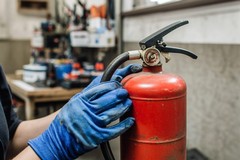
That dusty fire extinguisher tucked in the back of your garage or under the kitchen sink may have been there for years, and there is a good chance you have never given it a second thought until now. Fire extinguishers do not last forever, and once they expire, lose pressure, or get partially used, they become clutter you cannot simply drop in the trash. So how do you dispose of an old fire extinguisher? It is a more involved process than tossing an empty soda can, because these canisters are pressurized and often contain chemicals that require careful handling. If a fire ever does get away from you, remember that emergency restoration services in Eau Claire and its surrounding cities are available to help you recover.
At Chem Master Restoration, we see the aftermath of fires more often than most people would expect, and we know that a working extinguisher can make the difference between a minor scare and a major loss. That is exactly why keeping your equipment current, and knowing what to do with the old units, matters so much. Below, we walk through the safe, responsible steps for retiring a fire extinguisher.
Why You Cannot Just Throw It in the Trash
A fire extinguisher is a pressurized vessel, and even one that appears empty can still hold residual pressure or chemical agent inside. Tossing it in your household garbage creates real risks. The canister can rupture during compaction in a garbage truck, and the dry chemical or foam inside is not something that belongs in a landfill. Many municipalities, including areas around Eau Claire, have rules about pressurized containers precisely because of these hazards.
There is also a practical reason to slow down. Some extinguishers are not actually at the end of their life. A unit that has simply lost a bit of pressure or reached a service date might be a candidate for recharging rather than disposal. Understanding the difference saves money and keeps a functional safety tool in your home. Before you decide anything, take a moment to read the label and check the pressure gauge.
First, Figure Out What Kind You Have
Not all extinguishers are the same, and the type you own affects how you should handle it. Most home units are disposable and rated for common household fires, while larger or commercial models are often rechargeable. Look at the body of the canister for a label indicating whether it is rechargeable or single-use, and note the type rating, which is usually marked as A, B, C, or a combination.
The pressure gauge tells you a lot at a glance. If the needle sits in the green zone, the extinguisher still holds a charge and needs to be fully discharged before disposal. If it sits in the red, the unit may be empty or depleted. Either way, never attempt to force the canister open or puncture it. That pressurized shell is designed to stay sealed, and tampering with it can cause injury.
How Do You Dispose of an Old Fire Extinguisher Safely?
Once you know what you are working with, the disposal process becomes much clearer. So how do you dispose of an old fire extinguisher without creating a hazard or breaking local rules? The safest route depends on whether the canister still holds pressure and whether it can be recharged.
- If the unit is fully empty, release any leftover pressure outdoors by squeezing the handle for a few seconds, then remove the head or trigger mechanism if the manufacturer instructions allow, which signals to disposal facilities that it is safe.
- If the unit still holds a charge, do not discharge it indoors or into the air carelessly. Instead, contact your local hazardous waste facility or fire department for guidance, since a charged extinguisher is treated as hazardous material.
Many communities in and around Eau Claire host household hazardous waste collection events or maintain drop-off sites where pressurized containers are accepted. A quick call to your local waste authority or fire station will point you toward the nearest option. This is often the simplest and most responsible path, because trained staff handle the depressurization and recycling for you.
Recharge or Recycle Instead of Trash
Before you decide the extinguisher is done for good, consider whether it can be given a second life. Rechargeable models, common in businesses and larger households, can be serviced by a fire equipment company that will inspect, refill, and repressurize the unit. This is frequently more economical than buying new, and it keeps a reliable tool in service.
When an extinguisher truly is at the end of its life, recycling is the environmentally sound choice. The steel canister itself is valuable scrap metal, and once it has been safely emptied and depressurized, many scrap metal recyclers will accept it. Some fire protection companies also take back old units for proper processing. Choosing recycling over the landfill keeps pressurized waste out of the trash stream and puts the metal back into use.
Keeping Your Home Protected Going Forward
Replacing an old extinguisher is a good moment to think about your overall fire readiness. Keep at least one extinguisher on each level of your home, with a unit in the kitchen and near any workshop or garage where fires are more likely to start. Check the pressure gauge a couple of times a year, and mark your calendar so an expired unit does not sit forgotten for another decade.
Even the best preparation cannot prevent every incident, and when a fire does occur, the damage often extends far beyond what the flames touch. Smoke and soot travel through a home, settling into walls, fabrics, and ductwork long after the fire is out. Professional fire damage restoration in Eau Claire, WI addresses those lingering effects, from odor removal to structural cleaning, so your home is truly restored rather than simply patched up.
If you are dealing with the aftermath of a fire and are unsure where to begin, our team is ready to guide you through every step of recovery. We also provide fire damage restoration in Allen and its nearby areas, bringing the same careful, thorough approach to homes and businesses in that community. Fires rarely give warning, but knowing help is nearby offers real peace of mind.
Retiring an old extinguisher comes down to a few clear steps: identify the type, check the pressure, and choose recharging, recycling, or a hazardous waste drop-off rather than the household bin. Handling these canisters responsibly protects sanitation workers, keeps chemicals out of the landfill, and keeps you compliant with local rules. When you find yourself asking how do you dispose of an old fire extinguisher, the answer is almost always to route it to the right facility rather than the trash can.
Whether you are updating your home safety gear or recovering from a fire that has already happened, Chem Master Restoration is here to support you. Reach out any time to learn more about our services or to get help when you need it most. A little preparation today can spare you a great deal of trouble tomorrow.