

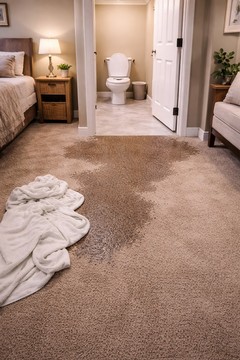
Few things sink a homeowner's stomach quite like stepping onto a soggy carpet and feeling water squish between their toes. Whether it came from a burst pipe, an overflowing appliance, or a storm that pushed water into the lower level, that moment raises an urgent question: should carpet be replaced after water damage, or can it be saved? The answer depends on several factors, and making the wrong call can cost you comfort, money, and even your family's health. When a water event strikes, acting fast matters, which is why many homeowners call for emergency restoration services in Eau Claire before they decide anything else.
At Chem Master Restoration, we've seen plenty of carpets that looked ruined but dried out beautifully, and others that appeared fine on the surface while quietly growing problems underneath. The key is knowing what to look for and understanding how the source and timing of the water shape your options. Let's walk through what really determines whether that carpet stays or goes.
The Source of the Water Changes Everything
Not all water is created equal. Restoration professionals classify water into three categories, and that classification is often the single most important factor in deciding a carpet's fate. Clean water, sometimes called Category 1, comes from a broken supply line, a leaking faucet, or rainwater. If that water is extracted quickly, your carpet and padding often have a strong chance of being saved.
Gray water, or Category 2, carries some contamination. Think of overflow from a washing machine, dishwasher, or a sump pump failure. This water contains detergents, dirt, and microorganisms that can make carpet risky to keep unless it's cleaned and sanitized thoroughly and promptly. Black water, Category 3, is the most serious. It includes sewage backups, flooding from rivers, or any water that has touched contaminants that pose a health hazard. When black water saturates a carpet, replacement is almost always the only safe choice because the fibers and padding simply cannot be disinfected reliably. If you're dealing with a backup, our team handles sewage removal and cleanup in Eau Claire and beyond with the proper safety protocols.
How Long the Carpet Stayed Wet
Time is the enemy of wet carpet. Even clean water becomes a problem when it sits, because the warm, damp environment beneath a carpet is exactly what mold and bacteria need to multiply. As a general rule, carpet that has been saturated for more than 48 hours becomes much harder to save, regardless of where the water came from. Once mold takes hold in the padding and subfloor, cleaning the surface fibers won't solve the underlying issue.
This is why the question of should carpet be replaced after water damage so often comes down to how quickly extraction and drying began. A homeowner who discovers a leak within hours and gets professional help immediately has a far better outcome than someone who returns from a weekend trip to find standing water. Fast, thorough drying with commercial equipment can preserve carpet that would otherwise be lost, which is one reason prompt water damage restoration in Eau Claire and the broader region is so valuable.
Signs Your Carpet May Be Salvageable
There are encouraging signs that a carpet can be dried and restored rather than torn out. If the water was clean, if it was extracted within a day or so, and if the padding underneath is in good condition, restoration is often realistic. Professional-grade dehumidifiers, air movers, and moisture meters allow technicians to confirm that the carpet, padding, and subfloor have all returned to normal moisture levels rather than just feeling dry to the touch.
Here are the conditions that generally favor keeping your carpet:
- The water was clean and came from a sanitary source.
- Extraction and drying began within 24 to 48 hours.
- There is no lingering musty odor after drying.
- The carpet is relatively new and in good overall shape.
- Professional moisture readings confirm the subfloor is fully dry.
When all of these line up, replacing padding alone is sometimes enough, with the original carpet re-laid once everything underneath is confirmed dry and clean.
When Replacement Is the Smarter Call
Sometimes holding onto a carpet creates more problems than it solves. If the water was contaminated, if the carpet sat wet for several days, or if you notice a persistent musty smell even after drying, replacement is usually the responsible decision. A lingering odor is often a sign that moisture or microbial growth remains hidden in the padding or subfloor, and no amount of surface cleaning will fully resolve it.
Older carpets are another consideration. If a carpet was already worn, stained, or near the end of its life before the water event, investing in restoration may not make financial sense when replacement delivers a fresh start. The same goes for carpets with delamination, where the backing separates from the fibers, a common result of prolonged saturation. In these cases, tearing it out protects both your home's air quality and your long-term investment. Our broader damage restoration services can address not just the carpet but the subfloor and surrounding structure too.
Don't Overlook What's Beneath the Surface
One mistake we see often is homeowners focusing only on the carpet while ignoring the padding and subfloor beneath it. Carpet padding acts like a sponge, soaking up and holding water long after the surface feels dry. Even if the carpet itself can be saved, the padding frequently needs to be removed and replaced because it dries slowly and traps moisture against the floor.
The subfloor matters just as much. Wood subfloors can warp, and concrete can hold moisture that migrates back into new materials if it isn't dried properly. This is why answering whether carpet should be replaced after water damage really requires inspecting the entire floor system, not just the visible surface. Professional equipment measures moisture at every layer so decisions are based on facts rather than guesswork, which protects you from paying for new carpet that gets installed over a problem that was never solved.
Making the Right Decision for Your Home
So, should carpet be replaced after water damage? The honest answer is that it depends on the water source, how quickly you responded, the age and condition of the carpet, and what's happening underneath it. Clean water caught early often means your carpet can be saved, while contaminated water or long exposure usually points toward replacement. The safest path is a professional assessment that evaluates every layer of the floor before you commit to keeping or tearing out.
Chem Master Restoration serves homeowners throughout Eau Claire and the surrounding communities, helping them extract water fast, dry thoroughly, and decide with confidence. Whether you need full restoration or simply professional carpet cleaning in Fall Creek, WI after a minor leak, our team brings the equipment and experience to protect your home and your health.
Water damage never waits, and neither should you. The faster you call, the more options you'll have, and the better the odds of saving what can be saved. Reach out to Chem Master Restoration for a prompt assessment, and let us help you make the right call for your carpet and your peace of mind.